

Lake Pointe Dental Care
Order of Your Oral Hygiene Routine
You’re awake, congratulations! Now, you are standing in front of the bathroom mirror, you’ve been wanting to upgrade your oral hygiene routine but you’ve heard a lot of conflicting information. There are so many tools and what order should you do them in? We’re here to help! If you’ve ever wondered, “What comes first brushing or flossing?” Read on!
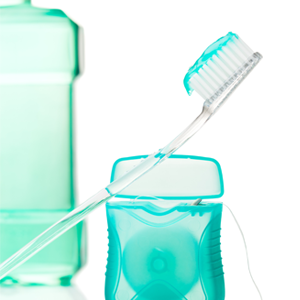
- You’ve probably heard us stress the importance of flossing at your appointments. Flossing is an incredibly important part of your mouth’s health. Flossing your teeth should take place one time per day. We recommend at night so that food does not rest in between your teeth while you sleep. Flossing before brushing is a lot like dusting before you vacuum. The particles will loosen with flossing and the brushing will sweep them away.
- You may have guessed it: the second part of your oral hygiene regimen should be a 2-minute brushing. Dentists look at your mouth in terms of quadrants. Therefore, your mouth consists on four separate quadrants and to ensure proper use of your two minute brushing session, we recommend spending 30 seconds in each quadrant. This brushing routine should take place two times a day!
- Brushing your teeth alone will not eliminate the majority of the harmful bacteria in your mouth. Cleaning your tongue is an easy addition to your routine and will benefit your mouth greatly. Take your toothbrush, apply a very small amount of toothpaste and brush your tongue in gentle, circular motions. You may opt for a tongue scraper instead, they can be purchased at most grocery stores.
- The finishing touch for optimum oral health is mouthwash. Sip a small amount and swish for 30-40 seconds. Spit it out and you are done!
It may seem like a lengthy routine but it actually only totals about 4 minutes. If you value your oral health and want to spend less time in a dental chair, it will be worth your time, we promise!
Avoidance Tactics: Top 10 Tips to Avoid Root Canal Treatment
We love seeing you in our office, but we wish we didn’t have to! Root canal treatment is a wonderful tool, and often the best tooth-saving tool that is available. Advancements in treatment have increased the success rate of endodontic treatment, while modern techniques and tools have decreased recovery time and pain. However, in spite of the advancements that excite us as professionals, we understand that most people would prefer to never experience root canal treatment!

If you are one of those people, read on for our top ten tips to avoid having to have a root canal down the road:
- Brush twice daily. Sounds simple, but far too many adults and children skip this step at night. Brushing your teeth before bed should be just as automatic as turning off the light.
- Floss once daily. Skipping the floss is like only washing 70% of your body when you shower. This doesn’t just contribute to bad breath – it also gives root-damaging bacteria a place to hide and thrive!
- Avoid hard foods such as hard candies and lollipops. Both of which cause cracks that allow bacteria to enter your root system.
- Weak teeth be wary. If you already have weak teeth or restorations, you should also skip crunchy fruits and vegetables such as carrots and apples, which just so happen to be two of the biggest tooth-crackers.
- Back away from the ice! Many people are tempted by the cool, fresh taste of ice at the end of a beverage. But chewing on ice can easily fracture, crack or break a tooth or filling! Once that happens, bacteria have an easy route into the nerve center of your tooth.
- Wear a mouth guard at night. If you are a grinder or clencher, make sure that you wear a night-guard to protect teeth from fractures, which eventually can expose the tooth’s roots.
- Wear a mouth guard while playing sports. No longer just for football and hockey players, mouth guards are an important part of equipment for nearly every sport, from soccer to snowboarding.
- Avoid acidic drinks and foods like soda and citrus juices. These beverages present a double whammy to teeth: First, they break down enamel. Then, they saturate the tooth in sugar for bacteria to feast on!
- Have regular dental checkups and cleanings. A cracked tooth found early can often be spared root canal treatment.
- Get your tooth pain checked out immediately! Any pain is a sign that something is amiss in your mouth and ignoring it will only make treatments more serious down the road.
Preventing Oral Cancer
While we cannot all necessarily prevent cancer from happening, with most cancers, including oral, head and neck cancers, there are things that you can do (or not do!) to reduce your risk.
- Quit Smoking: After five years of quitting smoking, your risk of oral cancer is cut down to just half of that of a smoker.
- Limit Alcohol: Excessive alcohol use is the second largest risk factor for oral cancer. Limit drinks to
 one per day for women and two per day for men.
 - HPV Vaccine: HPV is the leading cause of oropharyngeal cancer (the back of the mouth and throat). HPV is also responsible for a small number of oral cavity cancers (the mouth).
- Self-Exams: Be an advocate for your own health by regularly examining your mouth with a mirror and flashlight. Don’t forget to look under the tongue! Watch for unusual bumps, patches, different coloring, and report any to us that don’t heal within 14 days. Feel your lips, cheeks, throat and neck for unusual bumps and masses. There are a number of online guides for performing a thorough at home oral cancer self-exam.
- Have Regular Checkups: Oral health professionals such as dentists and oral surgeons are the second line of defense (after you) in terms of screening for oral cancers. Be sure to ask us any questions that come up during your exam.
- Eat Well: A healthy diet includes plentiful vegetables and fruits, is low in sugar and saturated fats, and includes lean sources of protein and whole grains. Incorporate new foods into your diet slowly for long lasting results.
- Exercise: Aim for 30 minutes of moderate exercise a day or more!
- Get Adequate Sleep and Minimize Stress: A lack of sleep and stress both contribute to inflammation which has long been recognized as a player in the cancer game.
Tooth Trauma – Complicated Crown/Root Fracture – What Now?
You tripped, you fell and now you have found yourself with a part of your tooth broken and the root exposed. A complicated crown/root fracture is common in trip and fall injuries. In this form of fracture, the crown is fractured with the fracture extending below the gum line, involving the root of the tooth. This is the kind of fracture we typically see portrayed in movies. This is a dental emergency and you should see us right away. Since this injury is traumatic, we thought it be best if you had a general overview of what to expect during the investigation and treatment stages.
Complicated crown/root fracture is the most challenging type of fracture to treat. As traumatic injury responders our priority is you, your health and your safety. We will do our very best to ensure your comfort during a stressful injury such as this.
We will work quickly in order to assess the vitality of the tooth. We will first assess for pulpal necrosis, vestibule swelling, periapical lesions and/or dramatic color change of the crown. There are instances in crown/root fractures where a gingiovectomy may be necessary in order to ensure that the tooth can be properly restored. During a gingiovectomy, we remove gum tissue that is no longer vital and reshape it to accommodate the tooth accordingly. Using the most current technology and techniques, we will treat your injury as the unique situation it truly is, tailoring a treatment plan and follow-up schedule specifically for you.
Remember: chipping your tooth mildly may not always be a dental emergency but you should call or see us right away so we may help you determine this.
Seeking Whiter Teeth? Not So fast!
“Can’t I just whiten my teeth at home?” Read on to learn why it’s important for teeth whitening to be prescribed and performed by a professional.
We’ve all seen them, those bulky little boxes of whitening strips and gel potions, calling our name out from the aisles as we casually pick up a fresh tube of toothpaste. I would even bet that more than a few of you have left the store clut ching that box, hoping that the $50 will be worth it. After all, you don’t know much about how to use them properly or what chemicals are involved. The most common side effects of at home whitening are: tooth sensitivity and gum sensitivity. There are a few things that should be considered prior to using at-home bleaching treatments.
Heading into the office for a check-up should always be your first step when reaching for a whiter smile. A dental professional can help you establish whether your mouth is healthy enough to withstand a bleaching treatment. If deep cavities are present, the bleach can have a straight shot to the blood vessels present in your teeth. The bleach can also gain access to the nerve and bone at the root of the tooth through a deep cavity. Just as you should not start any diet or exercise regimen without getting checked out by a physician, you should also take the same precaution with teeth enhancing treatments. When a dental professional performs a whitening treatment, the gum area is protected at application. Another great reason to opt for in-office whitening is that the professional products used by dentists contain only high quality ingredients that are gentler on your teeth!
A whiter, brighter smile gives the impression of youth. We perceive a white, bright smile as a healthy smile. Save yourself the sensitivity and see us today!
Vaping: Is It Harmless?
You may have noticed a shift in the smoking world over the past few years. Smokers have been seemingly taking a step in the right direction. Smokers are transitioning away from the traditional cigarette to the e-cigarette, this act is also known as: vaping. Transitioning to an e-cigarette from a chemical-filled cigarette that decades of research have proven is deadly seems like a good thing, right? Think again. There are many people venturing into the world of e-cigarettes blindly. While e-cigarette advertisements and companies are currently unregulated, we wanted to uncover a few potential dangers of this popular fad.
The e-cigarette anatomy consists of a battery, a heating element and a cartridge that holds the nicotine, liquid and flavoring. If anyone has tried to convince you that e-cigarettes are not addictive, they’re wrong. Nicotine is highly addictive, and while many teens and young adults believe that vaping is harmless, nicotine is known to negatively affect brain development in this age group. The act of holding an e-cigarette and the presence of nicotine has indicated that it could be a very strong gateway to smoking real cigarettes for these young adults. That correlation has big tobacco firms excited for the future. Tobacco companies have been severely restricted in their advertising campaigns. In the recent past, they were forced to rely on the ‘cool-factor’ of smoking, something they hoped that celebrities and young adult’s peers would embody. E-cigarettes present a gateway to becoming addicted to the real thing. This is just what tobacco companies had been hoping for! Speaking of advertising, while tobacco companies are highly restricted in their advertising campaigns, no one is regulating e-cigarette companies. In fact, these companies can make any claims they wish. With regard to the manufacturing aspect of the e-cigarettes and their cartridges, there is also no regulating body that creates standards for the products.
We have talked about the anatomy of the actual e-cigarette, but what makes up the vapor that is exhaled by the smoker? The cloud that you see consists of aerosol, nicotine, propylene glycol, flavoring and fine particles. The hotter the body of the e-cigarette gets, the more harmful the chemicals contained in them becomes. This means that the deadly carcinogens present in a traditional cigarette are also present in their electronic counterpart.
Research is currently underway to determine the long-term effects of vaping. While current research indicates that an e-cigarette is safer than smoking an actual cigarette, research also proves that e-cigarettes are far from harmless. If you are looking to improve your mouth and lung health, experts agree that quitting smoking devices altogether is still the only 100% risk-free option available.
Dental Implants: What’s All The Hype?
These days, we all know someone who has a dental implant, and you have probably heard us champion these teeth substitutes, as they become more and more the common cure for missing teeth!
But why?
We think that’s a valid question and it deserves a good answer!
Bone Loss
Any oral health professional will tell you that living with a missing tooth can have negative consequences that go well below the gum line. The problem doesn’t stop at the single tooth that goes missing. The jawbone also suffers. When there is not a tooth set in the jawbone offering regular stimulation, you lose bone mass in that area. That loss of jawbone contributes to a decline in fac ial aesthetics as the jaw shrinks away. The loss of jawbone also means that when you do have an implant later in life, you will likely require extensive bone grafting prior to the implant procedure. Traditional tooth “replacement” methods such as dentures and bridges do not solve the problem of bone loss.
In contrast, dental implants eliminate these problems and encourage a healthy, strong and adequate jaw by integrating with it (also known as: osseointegration). The implant then provides regular stimulation (as you chew food), and keeps the jawbone in proper health.
Lifestyle and Diet
Most people with dentures report that in addition to living in fear of their dentures falling out in social settings, they also must live with a restricted diet, unable to enjoy the foods that they previously ate. This same restricted diet goes for those with wobbly bridges and crowns as well. More often than not, those restricted foods are some of the healthiest ones, such as crunchy, fibrous fruits and vegetables.
Dental implants look and feel nearly identical to your regular teeth, and are second only to your natural teeth when it comes to form and function. Dental implants allow you to eat and live freely with a healthy diet and without fear. In addition to that, dental implants have a 98% success rate and can often last you for a lifetime!
Tooth Trauma – Uncomplicated Crown Fracture – What Now?
Tooth trauma can happen at any time. It could happen during a sports game, a car accident or as a result of something as simple and unexpected as a fall. The more information you have about correctly handling these situations the better. This knowledge could very well mean the difference between life and death for the tooth. The goal in treating a tooth trauma case is always to maintain or regain pulpal vitality in the affected tooth/teeth. In the previous tooth trauma entry we covered: avulsion (when a tooth is out of the socket). In this entry we will investigate a different kind of tooth trauma: an uncomplicated crown fracture. In this tooth fracture, the damage is limited to the crown of the tooth. There will be dentin exposed, but no pulp exposure.
In the instance of an uncomplicated crown fracture the first step an individual should try to accomplish is finding the piece of broken tooth. If a saline solution or distilled water is readily available, place the broken piece of tooth in this solu tion. Once you reach the dental professional, the rehydrated piece of tooth will be easier to bond, as the hydration increases its bonding strength.
What to expect during your visit, following an uncomplicated crown fracture:
- X-Rays will be taken
- Mouth will be checked for soft tissue lacerations and the presence of any other foreign bodies
- A sensitivity analysis will be performed
- The doctor or staff member will collect the tooth segment from you if you were able to find and preserve it
- We will assess the prognosis for the tooth
If the tooth is still vital, the process of reattaching the segment of tooth and the subsequent bonding will occur. Filling the dentin wound and applying calcium hydroxide to the vicinity of the pulp is the second to last step. Finally, smoothing and fluoridating small enamel defects.
Stay tuned in the upcoming months for the conclusion of the “What Now?” blog series!
6 Reasons for Considering Dental Implants
Loss of permanent teeth is more common than you’d think. The average adult age 20-34 is missing 1 permanent tooth, the average adult age 35-49 is missing 3 permanent teeth, and the average adult over the age of 50 is missing 6 permanent teeth! There are a variety of different tooth replacement options, but we believe that dental implants offer the most success, with the best aesthetics and functionality. Take a look at just a few of the many benefits of dental implants!
- Long-lasting. Dental implants are designed to be the permanent solution for missing teeth. Dental bridges last 5-10 years and crowns last 10-15 years, but dental implants can last 20 years, even a lifetime with proper dental care, making them a cost-efficient alternative to other modes of tooth replacement.
- No cavities. Because they are made of titanium, dental implants are not subject to decay. They also don’t put stress on other
 teeth, which helps avoid tooth erosion.
 - Like natural teeth. Dental implants are natural-looking and fully functional. Unlike dentures, which are bulky and removable, cause sores and require the application of adhesive, dental implants are comfortable, permanent fixtures that don’t interfere with eating or speaking. And, because pressure is applied to the jaw bone when you bite down on dental implants, chewing with dental implants doesn’t feel any different from chewing with your natural teeth.
- Preserve jaw bone. Without a tooth to support, the jaw bone begins to atrophy, and this bone degradation makes the replacement of missing teeth nearly impossible without the help of jaw regenerative procedures such as bone grafting.
- Appearance. Your teeth play an important role in supporting your facial structure. Missing teeth can cause your features to sag and your face to lose shape, which tends to have an aging effect. Replacing missing teeth works wonders for improving your appearance and helping you look younger.
- Tooth stability. When you’re missing a tooth, your surrounding teeth are no longer stabilized and they start to shift out of position. Dental implants secure teeth in place and, as a result, prevent severe problems such as periodontal disease and further tooth loss.
Schedule a consultation with us if you’re ready to transform your smile!
Osseointegration: Big Word, Simple Concept!
Was this word the invention of an evil doctor who loves long and complicated words? No! Osseointegration actually derives from the Greek osteon, bone and the Latin integrare, to make whole. It’s a physical process that was first observed by Swedish researchers in the 1960’s and refers to the functional connection between a titanium implant and living bone. Simply put, without osseointegration, dental impla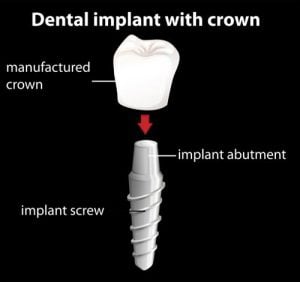 nts wouldn’t work!
Osseointegration is a natural process: When the titanium dental implant connects to bone cells, it is locked into the jawbone, forming a solid bond. While the process is natural, the implementation isn’t simple. Implant healing times and initial stability depend on implant characteristics and to a large extent on your doctor! We have ample experience in placing dental implants and therefore can ensure that you receive the best care and outcome when it comes to implant surgery and the healing process.
The first evidence of the bone bonding with the implant occurs after a few weeks, while a more robust connection progresses over the next months or years. The osseointegration process will make the implant resistant to external shocks over time, but it can still be damaged from trauma or poor care.
The benefits of dental implants can’t be overstated! Not only do they give you a fully functioning bite back, they also prevent your jawbone from deteriorating and protect your facial profile.
Give us a call if you have questions about the dental implant process!