

Lake Pointe Dental Care
Five Foods for Healthy Teeth
We all know that foods high in sugar and acid are bad for teeth, but did you know that some foods are actually good for them? Incorporating these dental friendly foods into your family meals can both fight tooth decay and prevent gum disease. Here are five oral health friendly foods!
Almonds, Brazil Nuts, and Sesame Seeds. These foods contain phosphorous, magnesium, potassium, zinc, and m ost importantly, calcium. Dietary calcium is not only good for your bones, it may actually contribute to tooth remineralization and fight tooth decay. Make sure to get the unhulled variety of sesame seeds, which are incredibly high in calcium.
Strawberries, Kiwi, and Citrus Fruits. These fruits have the highest concentration of Vitamin C, which helps to increase collagen in gum tissue and prevents gum disease.
Onions. Toss some raw onion on your salad or eat them on your hamburgers. Onions contain powerful bacteria fighters because of their sulfer-containing compounds and are natural cavity fighters.
Shitake Mushrooms. Recent studies show a natural sugar found in shitakes, called lenithan, specifically targets the bacteria which causes gingivitis (gum inflammation) and tooth decay while leaving non-harmful bacteria alone.
Apples and Celery. Water rich fruits and vegetables stimulate saliva production, which rinses teeth of bacteria. With their high fiber content, they act as natural tooth brushes, scrubbing your teeth as you chew, removing plaque and bacteria that may otherwise build up.
These simple everyday foods are great choices for snacks or to add to meals your family already enjoys. Put onions or shitakes as toppings on your pizza. Serve celery and apples with peanut butter and make a smoothie with your strawberries and kiwi. Nuts can be eaten as a snack on their own or try them as nut butter spread on toast. You can even throw nuts and sesame seeds in a stir fry for added texture and flavor as well as the nutritional benefit.
Green Tea. Besides these five teeth healthy foods, you can even get a boost for your oral health by drinking this powerhouse liquid! Green tea contains “catechins” that actually fight inflammation and control bacterial infections. One Japanese study found that regular green tea drinkers had less incidence of periodontal disease compared with people who drank the tea irregularly. So try drinking green tea instead of that second cup of coffee or have a refreshing green iced-tea on a hot afternoon.
Besides brushing and flossing, what you eat can make a difference to your oral health. It’s nice to know you can eat foods that taste good and be doing something good for your teeth at the same time. Now that’s something we can all smile about!
Evolution of Braces: Then and Now
Braces are a far cry from the teeth-alignment practices of hundreds and even thousands of years ago. Now, more than half of American teenagers wear braces, but back in the day some pretty strange gadgets were used in orthodontic care. Take a look at these braces of the past!
Ancient Braces
Even ancient civilizations believed that a beautiful smile goes a long way. Ancient Greeks apparently aligned their teeth using gold wires – that would be a pretty expensive luxury today! Even stranger, Egyptian mummies have been found with catgut bands, which are made from animal intestines, wrapped around their teeth. Imagine having that in your mouth!
18th Century
A Frenchman named Pierre Fauchard invented a device called the “Bandeau,” a metal object shaped like a horseshoe that attached to gold wires and corrected tooth alignment. This bulky metal “Bandeau” would have been a lot less fun to wear than the trendy bandeau tops people wear today!
20th Century
- In the early 1900s, people aligned their teeth using all kinds of materials: gold, silver, copper, even ivory and wood. Gold worked great because it was soft and easy to mold, but its softness was also a downside because it bent out of place and had to be adjusted frequently.
 By the 1970s, modern braces were taking hold. Professionals ditched the bulky, embarrassing wires and headgear for direct bonding, or gluing stainless-steel brackets to the teeth using dental adhesive. The subtlety of these braces was taken a step further with lingual braces, where the brackets are placed on the backs of teeth instead of the front. Tooth-colored brackets became another new way to disguise braces.
Modern Braces and Invisalign
In the 1990s and early 2000s, Invisalign took orthodontic care to a whole new level with invisible, removable teeth alignment. With Invisalign, you can eat all the foods that you can’t eat with braces, because you simply take it out while eating and pop it back in when you’re done. No wires for food to get stuck in!
Now, people even customize their braces, adding a personal flare by choosing brightly colored rubber bands. Aren’t you glad to live in a time when braces are constantly developing from the unusual orthodontic methods of the past?
What Color are Your Teeth?
What color are your teeth? Of course, there is no “right” answer. Teeth come in endless shades and ranges. When we talk about tooth color in our office, we try to break it down into no fewer than 40 shades (light to dark) and ranges (color). For example, you could have a very light shade of tooth in the reddish brown range, or a dark shade of tooth in the gray range. Everyone’s teeth are unique and the possibilities are endless.
You may be wondering, what makes a tooth the color it is now or will be in the future? We all know about coffee and tobacco as being major culprits of stained teeth, but what else goes into the making of a tooth color?
Things We Can’t Control:
- Genetics – Did you know that you could inherit your tooth color? You can also inherit your tooth’s propensity for staining.
 Aging – We now know that teeth simply turn yellow, as we age.
- Medicine Use – some medicines, such as certain antibiotics, can cause your tooth color to change.
- Injury – Traumatic tooth injuries can cause intrinsic discoloration of the inner part of the tooth, the “dentin”, which is difficult to remedy. Have you ever seen a tooth that looks “dead”? That gray tone has most likely been brought on by a traumatic tooth injury.
Things We Can Control:
- Food and Drinks – Certain foods and drinks, such as berries, sauces, coffee, dark soda, black tea and red wine, cause staining over time. Limit these foods and practice good oral hygiene habits!
- Over-fluoridation – Too much fluoride in children, while teeth are still developing, can cause tooth discoloration. Be sure to follow guidelines for safe fluoride use. Don’t abandon the use of fluoride altogether though. Fluoride offers numerous benefits such as: preventing tooth decay by making teeth more resistant to acid attacks and reversing early tooth decay. But, we’ve all heard that too much of a good thing can be a bad thing!
- Tobacco Use – It is well known that cigarettes and other tobacco products turn teeth yellow and eventually brown. Don’t smoke or chew.
What can you do about stained teeth? We’re glad you asked! We offer professional teeth whitening options for the best and safest results. No matter what tooth shade you’ve inherited (or created), we can help make it whiter. Give us a call today to find out more!
Fluoride: Nature’s Cavity Fighter
Nobody likes coming to the dentist to have a cavity filled! Many of our patients ask us how stop a cavity before it happens. Many people have heard of fluoride but wonder how it works and if it is safe. We wrote this blog to answer your questions about fluoride and to help you understand its benefits and how to use it effectively.
Fluoride occurs naturally in certain foods. You might be surprised to learn that it can be found in black teas and raisins, and in our water sources, such as lakes and rivers. And, because it provides such good protection from tooth  decay, it has been added to dental products to help prevent cavities.
Fluoride works for both children and adults. It’s true! Before teeth even erupt through the gums, fluoride taken in from certain foods and supplements makes tooth enamel stronger and therefore more resistant to decay. After teeth erupt, brushing with fluoride toothpaste helps rebuild (remineralize) weakened tooth enamel, reversing early signs of cavity formation. In addition, the fluoride you consume becomes a part of your saliva, constantly bathing your teeth with tiny amounts of the cavity fighter. While it is critical for infants and children to be exposed to fluoride when primary and permanent teeth are forming, new research indicates that topical fluoride is just as important in fighting tooth decay for adults!
Use the correct amount of toothpaste to benefit your teeth. While all toothpaste removes plaque (a thin film of bacteria that can cause gum disease and tooth decay), only toothpaste with fluoride can prevent tooth decay by making teeth stronger. Make sure you’re using the correct amount of toothpaste with your children!
- For very little ones, under 3 years of age, parents and caregivers should begin gently brushing teeth as soon as they come into the mouth with an amount of fluoridated toothpaste the size of a few grains of rice.
- For children ages 3 to 6, a pea-size amount of toothpaste is best. Everyone should brush their teeth twice a day and make sure to supervise children to help instill good habits.
Some mouth rinses also contain fluoride. You may already be protecting your teeth with fluoride without even knowing it! However, mouth rinses should not be used with children under the age of 6, as they may not be able it use it appropriately.
You may have fluoride in your water. Your community may have chosen water fluoridation (simply adding fluoride to drinking water) as a public health benefit. Water fluoridation is safe, effective, and healthy. The Center for Disease Control has noted water fluoridation as one of the ten best public health achievements of the 20th century.
For your best dental hygiene routine, ask us during your next visit about the right fluoride products for you and your family. Your oral health is our priority so we want to answer any questions that you have. Armed with the right information, your family can have healthy teeth for life. Contact our office to schedule your next visit! We can’t wait to see you soon!
Are You a Good Candidate for Dental Implants?
It’s estimated that 125 million Americans are missing at least one tooth. If you are one of them, you may be considering dental implants for tooth replacement. We think it’s important for you to know what factors make a person a good candidate for such a procedure. Here are a few things to consider.
Most People Are Good Candidates. Dental implants can replace one, several, or all of your teeth. They can be used in place of bridges or dentures. Good candidates have healthy gums and are old enough so that their jawbone has stopped growing. You should also have enough bone to support and anchor the implants. Even if you have lost bone in your jaw, however, you may still be a good candidate for implants. In fact, dental implants may be recommended to prevent further bone loss. In these situations, bone can actually be rebuilt with grafting procedures as part of the implant process.
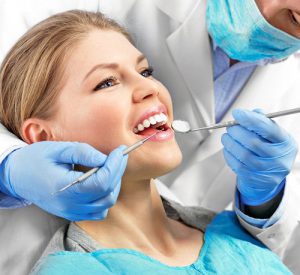 Evaluation. Successful implantation starts with a thorough evaluation of your jaw, teeth, mouth and overall health. You will receive a mouth X-ray and possibly a Computed Tomography (CT) scan. This will help us identify areas of bone loss and carefully see the shape of your sinuses and nerve location to make accurate assessments for your treatment. We will also do a thorough medical evaluation, as your overall health and history plays a big role in how well your implant will heal and fuse to the bone.
People At Risk of Poor Outcomes. Uncontrolled diabetes, cancer, radiation to the jaws, smoking, alcoholism, or uncontrolled gum disease are all risk factors that can adversely affect your outcome. You may still be a good candidate with one of these diseases, but we’ll want to thoroughly assess your situation and work with you and your doctor to increase your overall health and functioning. People who take certain medications, such as steroids or drugs that suppress the immune system may not be suitable candidates, either. And people with certain habits, such as people who severely grind or clench their teeth may put too much pressure on the implants, causing long term damage.
Overall, dental implants have a very high rate of success and patients tell us how happy they are with the outcome. If you are considering implants, we can complete a careful examination to determine what options are best suited for you. Call us today to make that appointment!
Oral Health Spotlight Gums
 Why should teeth get all the fame? Since the beginning of time, teeth have taken center stage in the oral health arena, while their close cousins, the gums, have occupied more of a back-seat role. So we have decided to dedicate this article to gums. What makes them healthy, what makes them sick, and why they are so important for whole-body health!
Gingiva, or “gums”, are the mucosal tissue that cover the jaw and hold the teeth in place. When they are healthy and properly intact, they offer a protective barrier for the jaw and tooth roots against food, bacteria and other materials, of which there are many that enter the mouth.
Healthy Gums:
Healthy gums typically are coral pink and color, and not recessed far above the tooth. They show a scalloped appearance over each tooth, and are firm and resist movement. They take brushing and flossing well, usually with no reaction whatsoever.
Unhealthy Gums:
By contrast, unhealthy gums may exhibit red, white and even blue hues, have a puffy or orange peel texture and may bleed when brushed or flossed. Untreated periodontal disease can affect the whole body, as it is related to health problems such as diabetes and heart disease, and also can result in lost teeth and poor nutrition down the road.
Prevention is Key:
The good news is that most cases of periodontal disease are preventable. While we don’t know exactly what role genetics play in terms of periodontal health, we do know that practicing good oral health is the first step to preventing periodontal disease. Habits such as brushing twice and flossing once per day and regular exams and cleanings can help many people prevent or slow the progression of gum disease.
We hope you have learned something new about your gums!
If you have any questions about your gums or any other part of your mouth, don’t hesitate to give us a call!
Is Periodontal Disease Contagious? And other questions…
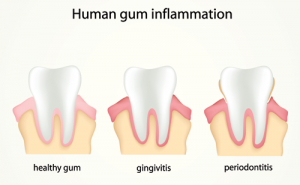 In our practice, we hear many great questions about periodontal disease and gums in general. So, to help educate our patients better, we have compiled a list of the most frequently asked questions for you here:
Q: Is periodontal disease contagious?
A: Yes and no. The disease, which is an inflammatory response to bacteria under the gums, itself is not contagious. However, that bacteria can be spread through saliva, which could in turn cause periodontal disease in another person. To be safe, don’t share utensils or toothbrushes in your house.
Q: Can children get periodontal disease?
A: No. Periodontal disease has only very rarely been found in children and adolescents. However, it’s never too soon to adopt good healthy gum habits! Teach your kids to brush twice and floss once every day.
Q: Do I need antibiotics to get rid of the bacteria?
A: Possibly. A number of factors go into our determination about whether a patient needs topical antibiotic treatment after a periodontal cleaning. If you do need it, it will be applied under the gums during treatment.
Q: Are diabetes and periodontal disease related?
A: Yes, periodontal disease is a common complication of diabetes, most likely because diabetes makes a person more prone to infection. New evidence also shows that good periodontal health may have a positive effect on blood sugar levels as well!
Q: What about heart disease?
A: This is less clear, however several studies have shown that gum disease may increase the risk of heart disease as well.
As always, we are here to help. If you have additional questions that don’t appear on this list, give us a call!
It’s Alive! Your Tooth, That Is!
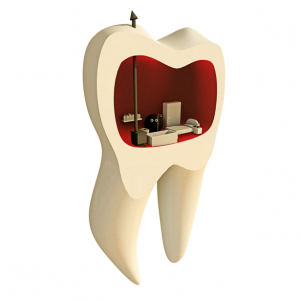 People often wonder, “How does a tooth get to the point of infection?”
It’s a common misconception that teeth are not alive. That belief leads to confusion about how teeth become infected. Because you can’t “feel” the part that you can see (the crown), many people think that their teeth are not alive. Yet, the opposite is true. Most of the material that makes up your teeth is, in fact, made of living cells. Since the material is alive, it makes a great hosting site for bacterial infections!
Similar to hair and fingernails, there is a part of your teeth that is not alive – it is the outermost part, called “enamel”. This is the hard, white part that you can see. It is made of calcium phosphate, a very hard mineral that is perfect for breaking down food when you eat. Underneath that enamel, however, is where all of the live action happens!
Starting on the outside and working our way in, we find dentin (alive), and then the pulp cavity and root canal, through which nerves and blood vessels flow.
Generally speaking, if the enamel is intact, bacteria cannot get through to the pulp to cause problems. However, if there is a crack in the outer part of the tooth due to injury or decay, this creates a pathway for bacteria to enter into the innermost part of the tooth (the pulp cavity and canal) causing infection of the living tissue.
That is when endodontic treatment becomes essential! The only way to remove the infected material is manually, by accessing the canal itself, irrigating and then filling, or closing off access, to the inside of the tooth again.
Teeth Whitening- What You Should Know
 Teeth whitening can lead to a brighter smile and a more confident you. Whether your teeth have been stained from drinking coffee and tea, or you are just looking to make your teeth a few shades lighter to match your new tan, teeth whitening is a great way to start with a fresh “you.”
When it comes to choosing your options of obtaining a brighter, whiter smile, there are a few options. We offer “in office” whitening (could be a single session, some could require multiple appointments), using bleaching or gels. Then there are alternative, “at-home” treatments, which include over the counter strips, gels, and other options. Each option has its benefits, whether it is convenience, price, time, longevity of brightness, quality, the list goes on and on. There is no perfect formula to obtain the ideal brightness of teeth. You definitely will get what you pay for. Although more expensive, in-office treatments will boast the highest results, but not everyone wants to dedicate the time or money. The benefits of an at-home remedy are that they are more wallet friendly, and can be done on your own schedule for merely minutes a day, as frequently as you desire.
What you should to know:
Regardless of which approach you take to making your smile brighter, there are a few things you need to know about dental health when it comes to teeth whitening. Your teeth (more than likely) will be sensitive. The sensitivity should only last a short while after bleaching, but some of the at-home strips do seem to leave a lingering feeling, especially when exposing your teeth to extremely cold, or extremely hot food and drinks. If your teeth continue to be sensitive for multiple hours or even days, it is recommended to avoid using those whitening products and consult us for the best alternative. In addition to tooth sensitivity, the gums may also become slightly irritated when exposed to the peroxide in the gels and bleaches. We generally use a rubber “dam” to protect patient’s gums from contact, but the at-home kits are usually one size fits all and may involve contact to the gums.
All in all, as with most things, there are general side affects, and will affect everyone differently. Be cautious and observant when considering whitening options. Read all instructions carefully and understand that some products will offer results quicker than others, and one product may work well for one person, but not for others.
Contact our office today to find out what the best whitening option is for you!
Fun Snacking with Braces
 You have probably heard that when you have braces, you have to change some of your eating habits. There are two reasons for this: First, to avoid unnecessary pain, and second, to protect the brackets and wires from breakage.
In general, when you have braces, you want to avoid anything that is TOO hard, chewy, sticky, crunchy, or BIG! We know that this can be a difficult transition, just remember that it is only temporary! Before you know it, you will be back to eating your favorite foods!
In the meantime, enjoy these brace-friendly snack and lunch ideas:
- Sliced Wraps: Spread sour cream, hummus, or salad dressing on a tortilla. Fill with shredded cheese, ground beef or grated vegetables. Roll it up and slice into soft, easily chewed pieces!
- Grilled Cheese and Avocado Bites: Make a grilled cheese sandwich on seedless bread (with avocado spread on the bread), then slice into small bite-sized pieces or fun shapes for a healthy snack.
- Couscous Salad: Cook couscous according to package directions, then add cheese or shredded vegetables, cubed tofu and top off with your favorite salad dressing.
- Soft Fruit Kebabs: Cube semi-soft fruits (peaches, bananas, citrus) into ½” pieces, then stack/skewer them with toothpicks.
- Smoothies: Start with Yogurt, ice or frozen seedless fruit and blend with a banana and a squirt of honey for a healthy, yummy snack or breakfast!
- Potato Salad: Combine cooked cubed potatoes with hardboiled eggs, mayonnaise, mustard, onions and a dash of pickle juice and dill for a hearty snack. Leave out anything hard such as celery.
Eating with braces may feel like a challenge, but it can also be a lot of fun!